Human MOTS-c peptide blood measurements
A blood level carries the circumstances of the person it came from. Childhood obesity and chronic dialysis ask very different questions of the same measurement.
Children and insulin resistance
Du and colleagues reported lower circulating MOTS-c in boys with obesity, including male children and adolescents, and an association with insulin resistance. The study measured the peptide already present in the participants’ blood.
Turning “lower” into an instruction to raise a number would skip the causal question: what produced that measurement? The finding gives a relationship to investigate in that population. It does not establish a healthy target range, explain every cause of the lower measurement or demonstrate that giving MOTS-c would improve insulin sensitivity in children.
Dialysis and cardiovascular risk
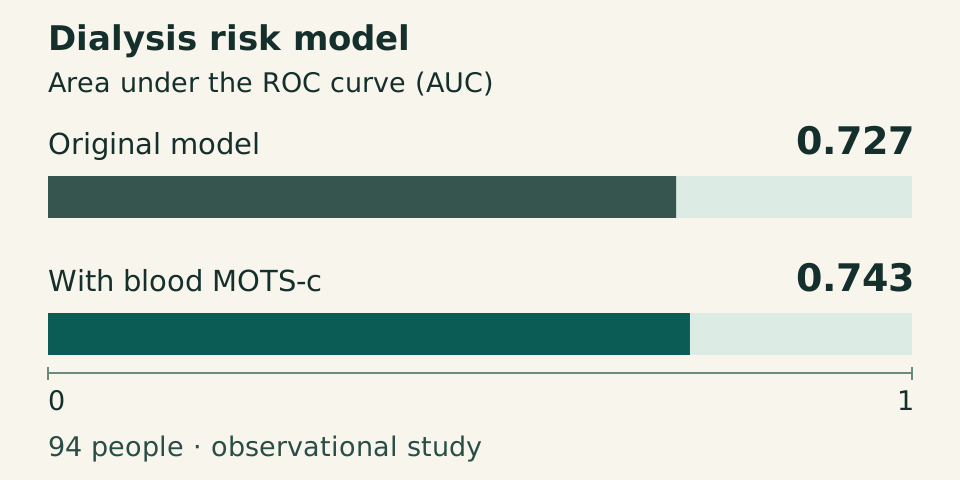
The multicentre chronic-hemodialysis cohort followed 94 people for a median of 26.5 months. Circulating MOTS-c was independently associated with a combined outcome of all-cause mortality and non-fatal cardiovascular events. The researchers measured endogenous MOTS-c; it was an observational study.
Adding MOTS-c to the risk model increased its area under the ROC curve, or AUC, from 0.727 to 0.743. AUC summarises discrimination: how well the model separates people who later had the outcome from those who did not. Those figures describe prediction, rather than the chance that a treatment succeeds.
My reaction to the modest change is restrained. A blood measurement can have a statistically reported association while adding relatively little discrimination to a model. The study leaves the effect of administering MOTS-c completely unanswered.
Genetics, longevity and multiple sclerosis
The 2021 genetics study linked a sequence-altering mitochondrial DNA variant with type 2 diabetes risk in certain populations. It suggests that inherited differences deserve attention when discussing MOTS-c biology. It supplies no evidence that taking the peptide caused that risk.
An earlier commentary on exceptional longevity explored a possible genetic connection with very long life. The longevity genetics intrigue me; a treatment outcome is still missing. The paper’s question is a much narrower proposition than a general claim of life extension.
The multiple-sclerosis comparison found different serum MOTS-c levels in patients and healthy controls. Again, disease context entered the measurement. The participants were being compared by existing blood levels, without a MOTS-c treatment intervention.
The human experiment still missing
Across this evidence base, human work primarily measures a peptide the body already makes. The review of stress, metabolism and ageing connects those observations with the cell and animal experiments. Completed human trials demonstrating the efficacy of added MOTS-c are absent.
A carefully monitored human intervention could answer whether changing exposure produces a useful outcome, and what harms accompany it. For now, the human measurements offer clues about physiology and disease. I’m unwilling to build a treatment story out of a blood comparison alone.
The safety and half-life page covers the other missing measurements. The questions page addresses personal reports, timing and combinations.